
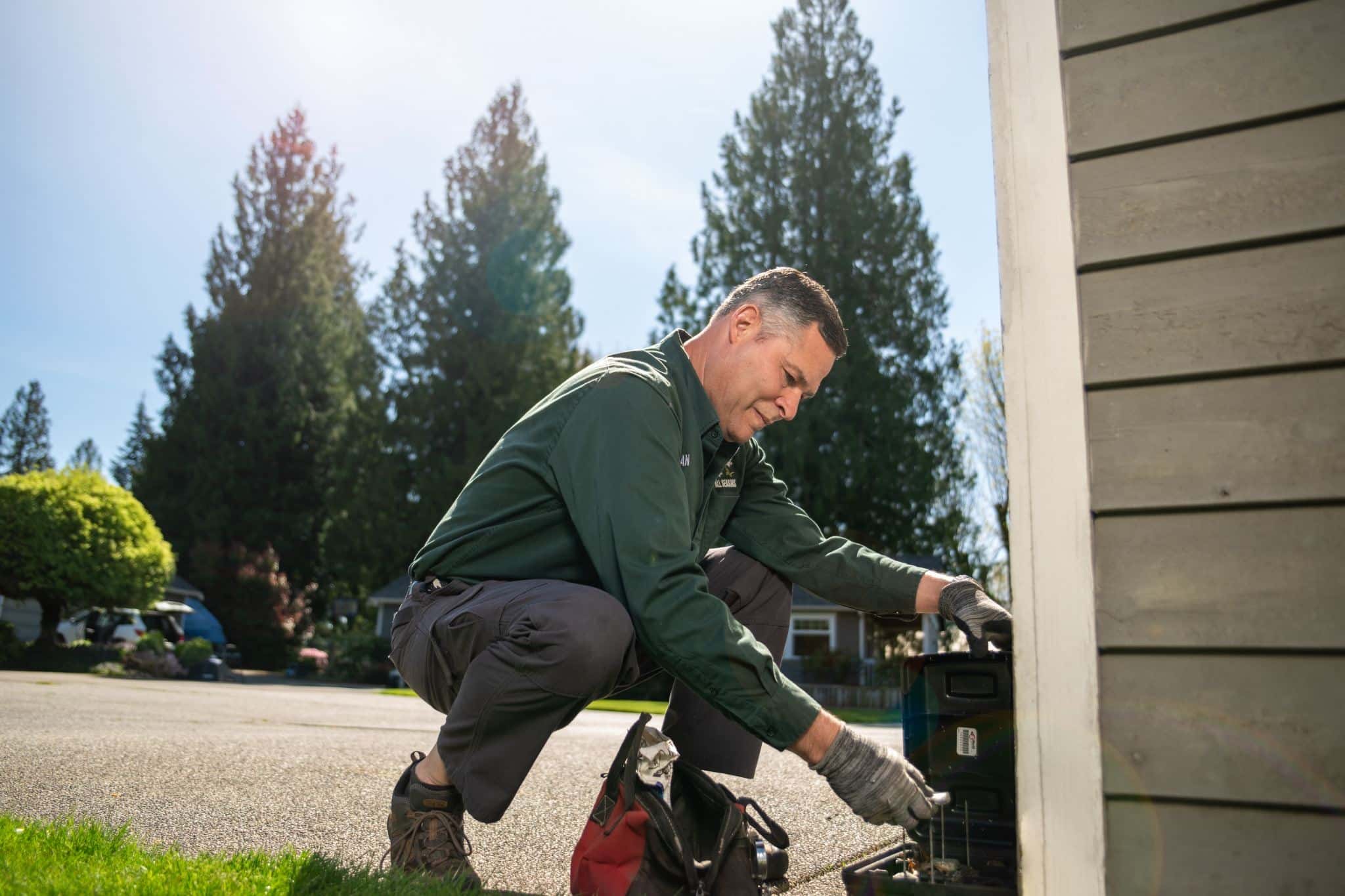
Most homeowners don't think about how pests get inside until they start seeing them.
An ant trail appears in the kitchen. Scratching starts in the attic. A mouse suddenly shows up in the garage.
But pests don't simply appear. Somewhere around the home, they found a way in.
At All Seasons Pest Control, one of the things we look for during an inspection is pest entry points—small gaps, openings, and conditions around a home that can give rodents, insects, and other pests access.
Some are obvious. Many aren't.
Here are seven places we commonly look.
1. Gaps Around the Foundation
The foundation is one of the first places we inspect.
Small gaps around siding, vents, pipes, and other areas where materials meet can create opportunities for pests to enter.
Rodents are particularly good at taking advantage of surprisingly small openings.
A homeowner may never notice these gaps during everyday life, but they're exactly the kinds of areas a pest control technician is trained to look for.
2. Utility Lines and Pipe Openings
Plumbing, electrical wiring, cable lines, and HVAC equipment all need access through the exterior of your home.
That can also create potential pest entry points.
If the space surrounding a utility penetration isn't properly sealed, insects or rodents may be able to follow that opening into wall voids, crawlspaces, garages, or other protected areas.
3. Crawlspace Vents and Access Points
Crawlspaces provide exactly what many pests are looking for: shelter, darkness, and protection from the weather.
Damaged screens, gaps around crawlspace doors, or other openings can allow rodents and insects to enter without ever passing through the living areas of the home.
That's one reason pest activity can remain hidden for so long.
4. Garage Doors
Garages are another area homeowners often overlook.
Small gaps beneath or around garage doors can provide access for rodents and insects. Once inside the garage, pests may find additional openings that lead farther into the home.
Because garages also provide shelter and potential food sources, they're an important area to examine during an inspection.
5. Rooflines and Attic Openings
Not every pest enters at ground level.
Rooflines, vents, damaged screening, and gaps around exterior materials can provide access to attic spaces.
Once pests reach an attic, homeowners may not know they're there until they begin hearing movement or discover other signs of activity.
6. Doors and Windows
Worn weather stripping, damaged screens, and small gaps around doors and windows can provide easy access for insects.
These areas may seem minor, but pest pressure changes throughout the year.
An opening that hasn't caused a noticeable problem before can become important when pest activity increases around the property.
7. Areas Hidden by Landscaping
Sometimes the issue isn't just an opening in the home—it's what's happening around it.
Vegetation and landscaping can make certain parts of the exterior difficult for homeowners to see. They can also create conditions where pest activity goes unnoticed.
During a professional inspection, we're not only looking at the structure. We're looking at what's happening around it.
Finding the Entry Point Is Part of Solving the Problem
Treating the pests you can see is only part of effective pest control.
If there's an underlying entry point or condition allowing pests access to the home, the problem may continue.
That’s why professional inspections matter.
At All Seasons Pest Control, our technicians look beyond the obvious signs of activity to identify areas around your home that could be contributing to the problem.
For more than 40 years, we've helped homeowners throughout Pierce County and the South Sound protect their homes from rodents, ants, wasps, and other common pests.
If you're seeing pest activity—or simply want to know whether your home has vulnerable entry points—contact All Seasons Pest Control to schedule a professional inspection.